How Do I Install New Grass at My House in Winnipeg?
Most Winnipeg homeowners ask the same thing the first time they look at a bare or beat-up yard: where do I even start? You see neighbours with thick green lawns, you see the pile of dirt the builder left, and the two don't connect.
Here's the honest version of how new grass goes in at a house in Winnipeg, without the YouTube fluff. If you'd rather hand it off, we install across the city and offer a free walk-through — but you should still know what good work looks like before anyone quotes you.
Sod or Seed for a Winnipeg Yard?
Seed is cheaper on paper. In Manitoba, it's also a six-to-twelve month project with constant watering, weeds, and bare patches you'll be fixing the following spring. Our growing season is short, and clay soil makes germination unpredictable.
Sod is what almost every Winnipeg homeowner ends up choosing — you get an instant lawn, weeds get crowded out, and it's rooted before fall. For most yards in neighbourhoods like Bridgwater, Sage Creek, Charleswood, or River Heights, sod is the only realistic option if you want grass this year.
Step 1: Soil Prep (The Part Most People Skip)
This is where 90% of failed lawns go wrong. Winnipeg sits on heavy clay, and most new builds get scraped down to that clay with a thin dusting of topsoil. Sod laid on clay roots poorly and dies the next summer.
Proper prep means removing old debris and dead grass, regrading so water flows away from the foundation, and bringing in 3–4 inches of quality screened topsoil over the existing base. The yard should be raked smooth, lightly rolled, and free of rocks bigger than a golf ball.
If your yard pools water after a heavy rain, fix the grading now. Laying grass over a drainage problem just gives you a green swamp. Our muddy backyard guide goes deeper on this.
Step 2: Laying the Sod
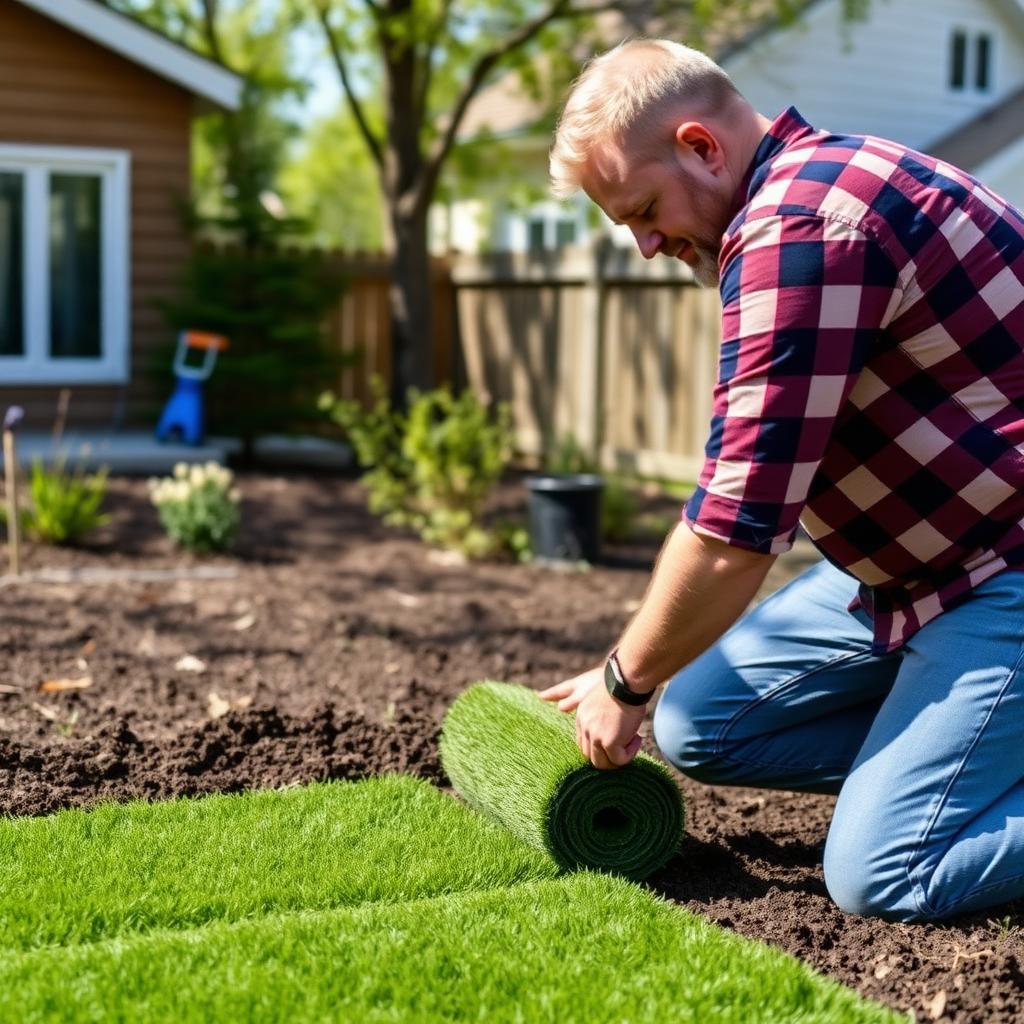
Sod comes on pallets in rolls about 2 feet by 5 feet. Start along a straight edge — your driveway, sidewalk, or fence line — and work outward. Stagger the seams like bricks so there's no long continuous line, and butt the edges tight without overlapping.
Cut around curves, trees, and garden beds with a sharp utility knife. Once it's all down, roll the lawn with a half-filled water roller to press the roots into the soil. This single step makes a huge difference in how fast it knits in.
A full pallet covers about 500 sq ft and weighs roughly 2,500 lbs wet. For an average Winnipeg front yard you're looking at one to two pallets. For a full property, three to six. Get it laid the same day it's delivered — sod that sits stacked in July heat is sod that's already dying.
Step 3: Watering the First Three Weeks
This is the part homeowners underestimate. New sod needs deep watering twice a day for the first 10–14 days. Not a light sprinkle — enough that if you peel back a corner, the soil underneath is wet two inches down.
After two weeks, drop to once a day. After three weeks, every other day. By week four it's rooted in and you can mow it for the first time, blade set high. If you skip the watering schedule, the seams shrink and you end up with brown gaps you can't fix.
What It Costs and When to Book
Most full installs in Winnipeg fall between $4 and $7 per square foot supplied and installed. That covers soil prep, sod, delivery, and labour. Delivery-only is priced per roll if you want to lay it yourself.
Spring (May–June) and early fall (late August–September) are the best windows. Mid-summer works too but you'll be watering twice as hard. Our schedule fills up two to three weeks out by June, so booking ahead matters.
If you want us to come look at your yard, request a free estimate and we'll give you a straight number — no pressure, no upsell. The $200 new-customer credit comes off the final invoice when you book.
Ready to Fix Your Yard?
Get a free estimate with no obligation. We'll come look at your yard and give you a straight answer about what works best.
Get a Free Estimate